Denude Stories · Cinema, memory and inheritance
A Denude ProfileCécile Coolen: A Homecoming in Cinema
How twenty-five years of editing other people's histories led one filmmaker back to her own

The stories that wait for us
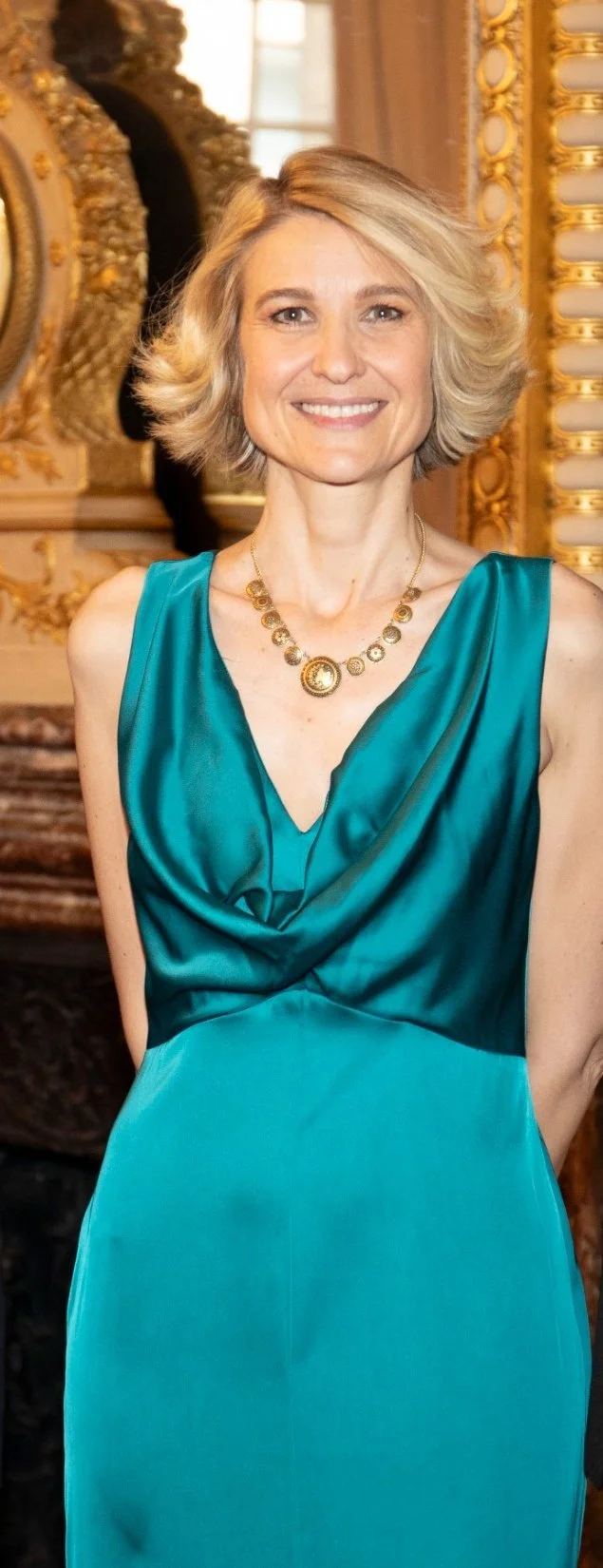
I first met Cécile Coolen at the Bastille Day celebrations at the French Ambassador’s Residence in London. It was a warm, convivial evening, full of easy conversation and good company, yet Cécile stood out. Fair-haired and wide-smiling, she had a warmth that put you at ease before she had said a word, and the sort of presence that made you want to know her story. It soon became clear that it was far richer than a single conversation could hold.
For twenty-five years, Cécile sat in the darkness of the edit suite, shaping the histories of others. As lead editor on nearly a hundred documentaries, many of them acclaimed, she built the emotional architecture of other people’s stories long before she thought to tell her own. Now, as a director in her own right, the shape of her career looks less like a conventional professional path than a homecoming.
"It feels almost pre-designed," she says, "like a trail of white stones laid out across my career." The documentaries she was drawn to, again and again, without ever quite knowing why, turned out to be chapters of her own family's story: a landmark film on the early days of cinema, wartime intelligence and special operations, the Franco-British alliance. Cécile had spent decades editing these subjects believing them to be simply the material of her trade. She had, as she puts it with quiet astonishment, been "editing my own heritage.”


“It feels almost pre-designed, like a trail of white stones laid out across my career.”
Cécile Coolen · Filmmaker and editor
In this story
An Inheritance Made Visible
The revelations about her family arrived, fittingly, through relatives rather than research. Her father handed her a box of archives spanning two centuries. Later, her mother found a wartime notebook belonging to Cécile’s grandfather. Filled with coded locations, aliases and secret schedules, it took Cécile years to decode, with help from a former French intelligence officer. Although her grandfather does not appear in the official records, the notebook and her subsequent research suggest that he served as a radio operator supporting several Special Operations Executive (SOE) and Secret Intelligence Service (SIS) networks. Her grand-uncle’s documented wartime service helped her trace the connections suggested by the notebook. Piece by piece, it revealed a covert life and unsettled the family story she thought she knew.
Until she opened the family archive, Cécile had no idea of her family’s connection to Léon Gaumont, one of the founding figures of cinema. In 1898, Gaumont served as a witness at the wedding of Cécile’s great-grandparents, Eugène Becqué and Louise, described on their marriage certificate as “a friend of the bride and groom”. In 1905, Eugène was appointed to lead the Barcelona branch of the Gaumont company, distributing its films and equipment across Spain and Portugal. That same year, Eugène and Louise hosted the pioneering filmmaker Alice Guy in Barcelona. In her autobiography, Guy remembered the hospitality she received from Louise during her stay.
A postcard preserved in Cécile’s family archive offers another glimpse of those connections. In 1942, Louise received a postcard from her sister Marguerite recalling ‘the times we spent in rue Saint-Roch’, the Paris street where, Cécile explains, Gaumont’s earliest premises were located. For Cécile, this brief recollection suggests her family’s ties to the early cinema pioneers were personal as well as professional.
For a woman who had once been steered toward law, told, in effect, that becoming a lawyer or a magistrate was the only acceptable family tradition, discovering that cinema also ran through her family history landed as something between shock and relief. She describes feeling a physical weight lift from her shoulders as she realised it. Cinema, it turned out, was not a rebellion against her family's expectations but a dormant inheritance simply waiting to resurface. "It gave me the implicit permission to fully own my path," she says.
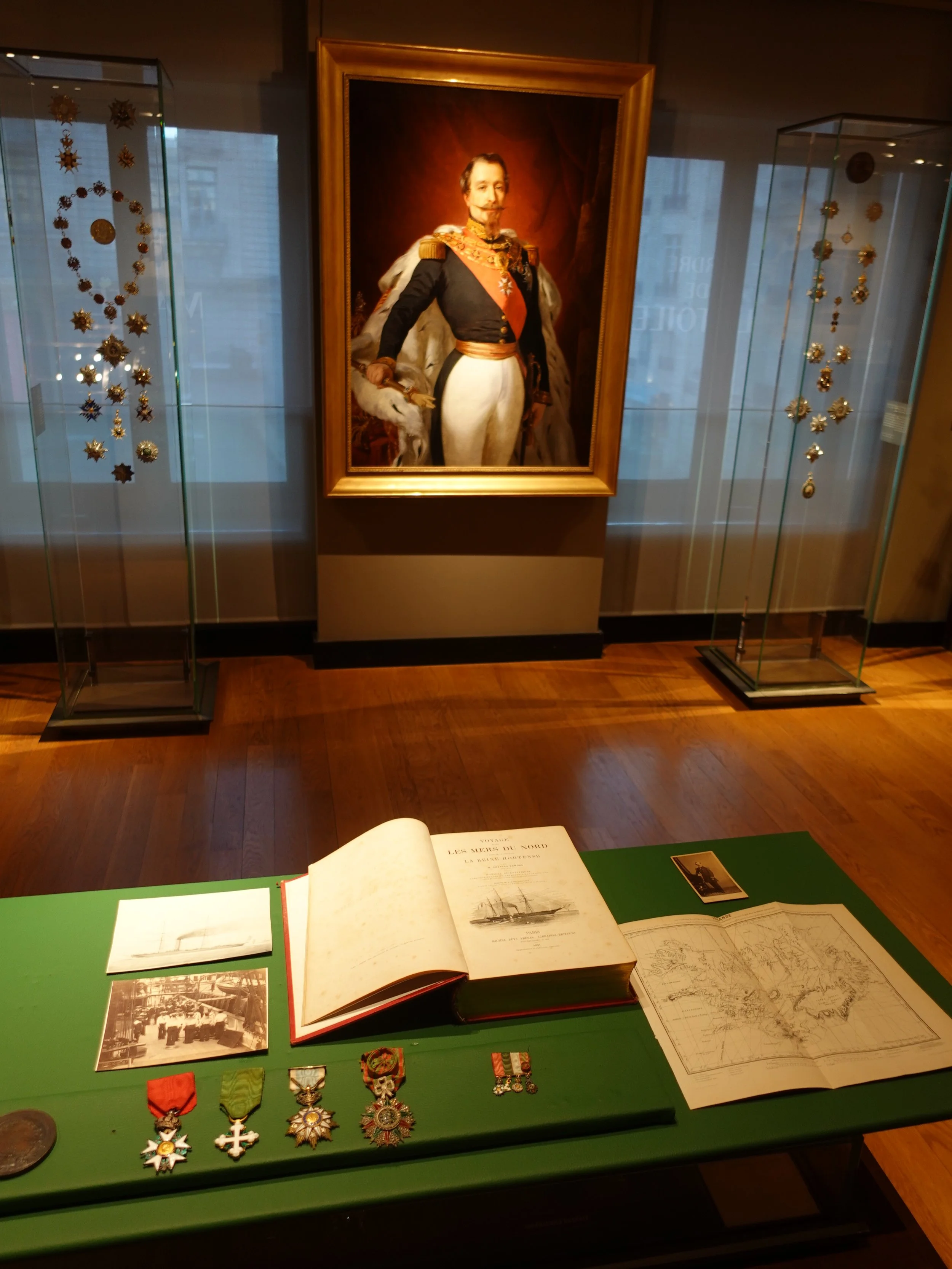
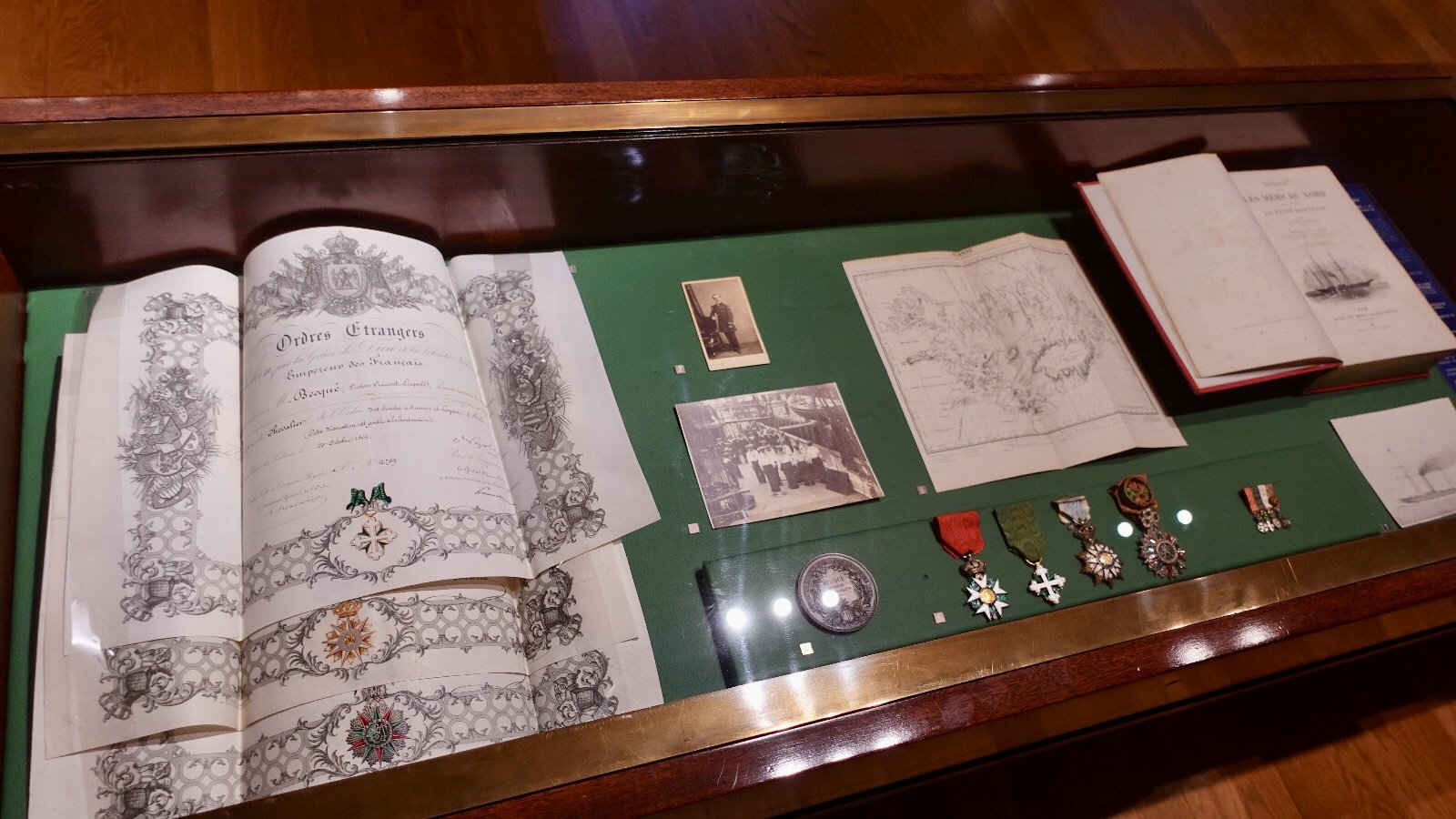
That inheritance has made Cécile the custodian of an archive extending far beyond her immediate family tree. She holds photographs dating from 1895. That abundance, Cécile explains, was made possible by Eugène’s work at Gaumont on rue Saint-Roch, which gave the family unusual access to cameras and the ability to develop photographs at home, something quite extraordinary for the period. Her ancestors, she says with amusement, used cameras with something like the enthusiasm we now bring to smartphones. One 1903 image captures an ancestor scolding his granddaughter, who refused to sit still through the long exposure. Among the most significant objects is the original logbook of her ancestor Léopold Becqué, an aide-de-camp to Prince Napoléon. It records, hour by hour, six years of diplomatic voyages undertaken on Napoleon III’s orders and, she believes, reveals events still unknown to historians. Cécile describes her role not simply as preservation, but as restitution: giving real people, long folded into private memory, “the posterity they deserve.” Léopold now has his own display case at the Musée de la Légion d’Honneur in Paris, while his son Eugène is cited in international film-history research.
A private family archive has begun to enter public history, with, she notes, much more still to uncover. There's no formal long-term plan for the archive yet, though she's encouraged by the interest it has attracted from historians and researchers. She hopes eventually to travel to Spain to investigate the four years her ancestors spent establishing Gaumont’s Spanish operation. Her interest lies in a largely forgotten chapter in the early spread of cinema across Europe, one she says remains little known even within Gaumont itself, and which she hopes to explore through her own cinema and historical research. She is clear that this is still only the beginning. Preserving and understanding the archive is work she expects to continue throughout her life, rather than a project with a fixed end point.
“Cinema, it turned out, was not a rebellion against her family’s expectations but a dormant inheritance simply waiting to resurface. ‘It gave me the implicit permission to fully own my path,’ she says.”

A Body of Work
Long before these family discoveries surfaced, Cécile’s talent for this world was already evident. She grew up in Paris, drawn to drawing, visual art and history. At fourteen, joining a new video workshop established by her art teacher proved a revelation. From that moment, she knew she wanted to edit historical documentaries. At twenty-one, she edited her first prime-time documentary, Contre l’oubli (Against Oblivion), directed by William Karel, about the liberation of the concentration camps. The film won an Emmy Award for Best Documentary; Karel and Jean-Pierre Elkabbach, then head of France 2, travelled to New York to receive it. Twenty-five years and nearly a hundred films followed for broadcasters including Arte, France Télévisions and Canal+, with recognition from IDFA, the Prix Europa and festivals in Hollywood and New York. In 2018, she edited an episode of Les coulisses de l’Histoire, followed by a second in 2021, before later directing an episode of her own. She loved editing so completely, she says, that directing did not cross her mind for a long time.
One film would prove particularly significant. Her work as editor of the 2016 documentary Charles Pathé, Léon Gaumont, premiers géants du cinéma would later give her the key to understanding Alice Guy’s letter and Léon Gaumont’s documents in her family archive. Without that earlier immersion in their story, she says, she would never have recognised what the documents meant or begun researching them.
The move from editing to directing, meanwhile, depended on finding the right moment. Producers had offered her directing opportunities long before she took one, but as a single mother she could not commit to the long absences the work would demand, and her priority, she says plainly, was her daughter's stability. It was only once her daughter had begun her own adult life that Cécile allowed herself to step forward, a transition she describes as a natural, joyful leap rather than a hard-won reinvention, one that expanded her world into research trips and encounters with extraordinary people, and that she says transformed her life for the better, even if it now rarely leaves room for a quiet weekend.
On His Majesty's Secret Service, released in 2022 in France as La Résistance, au service de Sa Majesté, was her directorial debut, a documentary on the role of the British Special Operations Executive (SOE) in the liberation of Europe, co-written with the historian Olivier Wieviorka and broadcast on Arte in August 2023. At its heart is a stubborn myth in French accounts of the war that she set out to unpick: the popular image of the Resistance as partisans acting alone against the Nazi occupier, when in truth many of these clandestine networks across occupied Europe were mobilised, organised and funded by the SOE. Distilling the wartime histories of an entire continent into fifty minutes meant uncovering the hidden history of SOE networks in each country involved, just to find the handful of threads worth keeping, an undertaking she calls the hardest research of her career.
“I want the audience to be seized by a fascinating human story,” she says, “to discover a piece of history almost without realising they are learning, while still understanding the wider picture.” Once the historical framework is established, she asks which person can best embody the larger history she wants to tell.
In On His Majesty’s Secret Service, that approach brings us to a less widely known figure in that history: Lise de Baissac, an SOE agent whose family knew she had been parachuted into France and were proud of her, but knew little about what she had undertaken. Dropped into occupied France under the cover of a widow, Madame Irène Brisse, she settled into a flat in Poitiers within earshot of the local Gestapo headquarters, quietly organising safe houses and arms-drop reception committees while her neighbours, and even her own cleaning lady, suspected nothing. It is precisely that nerve, Cécile says, hiding in plain sight through sheer audacity, that made her impossible to leave out once her story surfaced, exactly the character she needed to carry the wider story she wanted to tell.
Lise did not want to talk about her wartime service. When asked, she would say her brother had done it all. Claude de Baissac was an SOE network leader in his own right, organising Resistance groups across Normandy and neighbouring areas. After D-Day, these groups helped disrupt German movements towards the Normandy front, cutting railway and telephone lines and putting hundreds of vehicles out of action.
Cécile is wary of hagiography; she believes real people become more moving, not less, when their full character, flaws included, is allowed to show. It was in that spirit that she included one of Claude's own recorded lines in the film: "I am very strong, you can give me any mission." Yes, Cécile says, it sounds arrogant, because he could be arrogant, and that confidence is part of what she loves about him. She asked his nephew, Claude Junior, to voice the words for the film, half-expecting him to bristle. Instead, he laughed, delighted, almost exasperated: "Did Uncle Claude really say that?", a moment that seemed to carry both shock and quiet reassurance at once. For Cécile, that exchange captures something she holds to firmly: honouring someone means telling the truth of who they actually were, not smoothing away the parts that don't fit neatly.
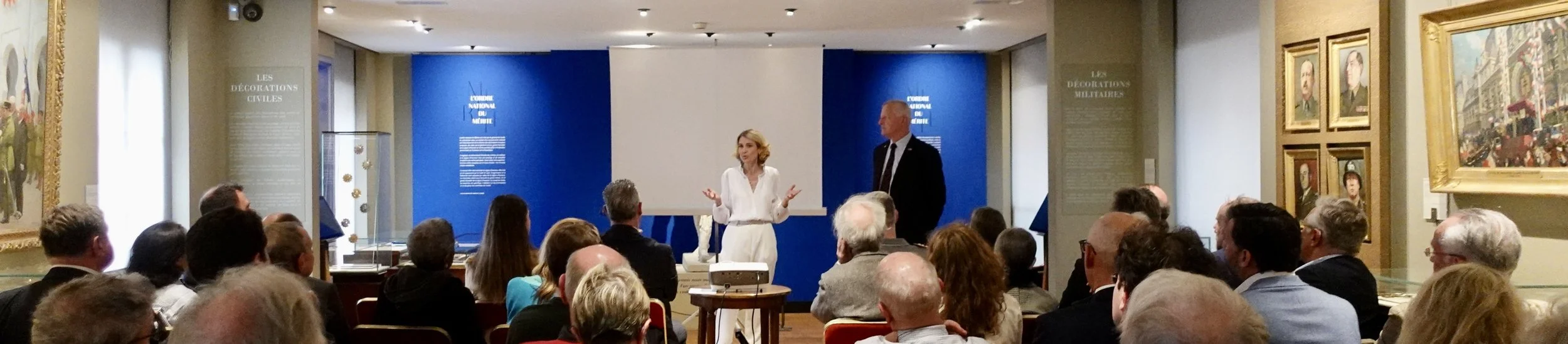
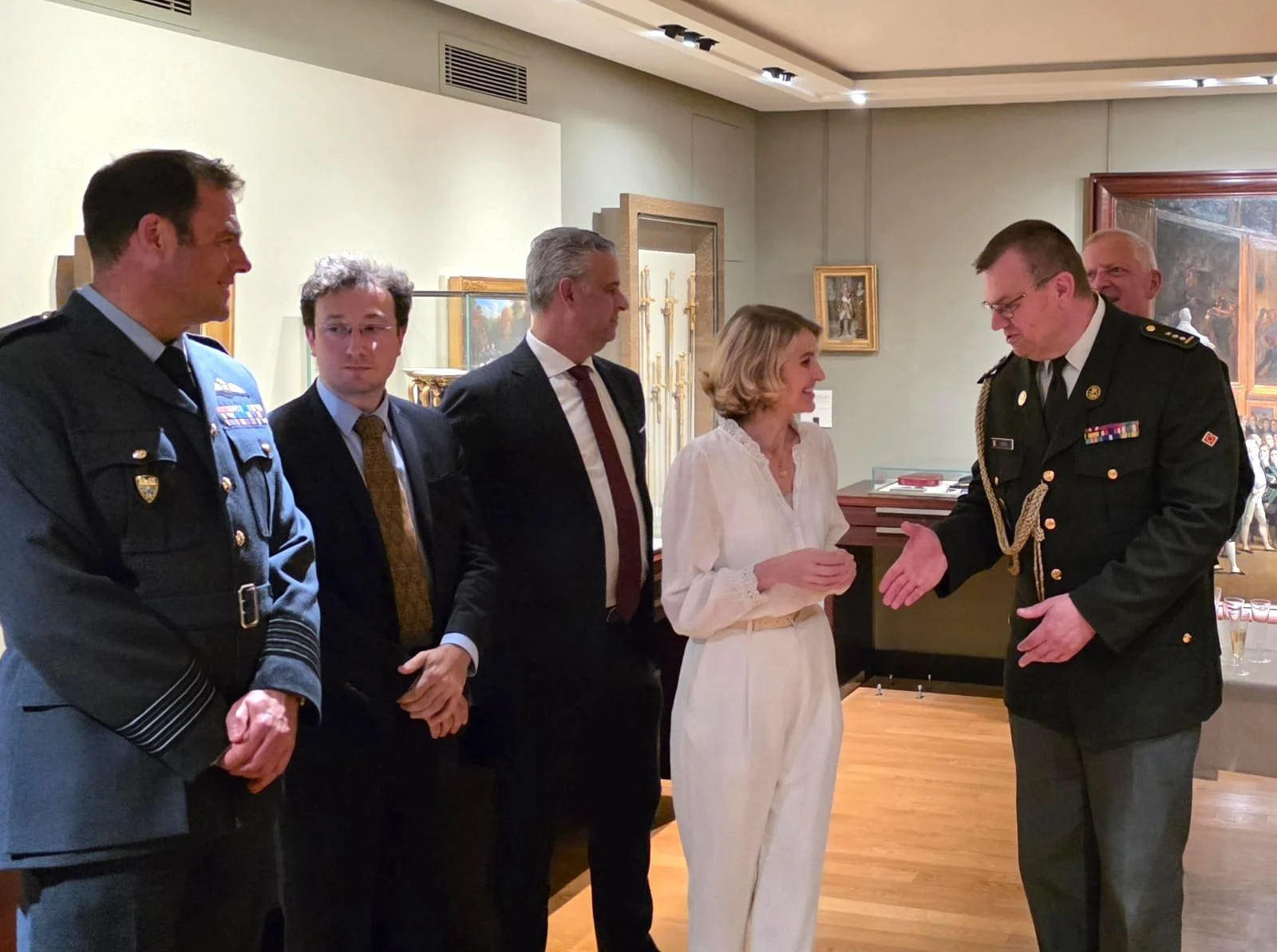
The film has since travelled through both capitals it concerns. Its first special screening took place at the Institut Français in London in May 2024, at the invitation of the French Ambassador. It later screened in Paris at Les Invalides, in partnership with the Musée de l'Ordre de la Libération, with both the French and British embassies among the guests. French viewers kept telling her they had no idea how central Britain's role had been in their own wartime story, while British audiences met a story they thought they already knew, seen suddenly from an unfamiliar angle.
The praise mattered most when it came from people who knew the world of intelligence firsthand. Sir John Scarlett KCMG OBE, former Chief of the British Secret Intelligence Service, and Alain Juillet, a former senior figure in French intelligence, both credited the film with capturing a poorly understood chapter of Anglo-French cooperation. In a genre always vulnerable to sensationalism, their recognition meant more to her than any review. The French press responded warmly too. Le Monde praised the vivid portraits of its central figures, while Télérama celebrated a cast of characters compelling enough to deserve films of their own.
“I want the audience to be seized by a fascinating human story, to discover a piece of history almost without realising they are learning, while still understanding the wider picture.”


The Women Who Changed History
The attention Cécile gives to Lise de Baissac is part of a much wider interest in overlooked lives. It has shaped fifteen years of research into women in wartime intelligence networks. What surprised Cécile was not simply how many women were involved, but the authority some of them held. The familiar story often confines them to supporting roles, hiding fugitives, passing messages or standing behind their husbands. In reality, many were commanders, tacticians and strategic leaders. Their stories remain better known in Britain than in France, where the work of remembrance continues. For Cécile, this imbalance was not accidental. History was largely recorded by men and shaped by the assumptions of its age.
Part of why these stories are surfacing only now, she says, is not simply a shift in attitudes but a matter of access: for decades, history belonged to what was visible, troop movements, battlefields, treaties signed in daylight, and it was the gradual declassification of secret archives that exposed what had been happening in the dark, the intelligence work that quietly shaped many of those visible outcomes in the first place. Only now, with that material finally surfacing, can the women behind it take their real place in the story.
Asked what united the women whose stories she has uncovered, Cécile is careful not to essentialise: courage and skill, she says, belong equally to men and women. But a pattern still emerges, a deep patriotism, sometimes sharpened by personal loss, for some a fierce resolve to avenge a lost husband, paired with sharp intuition and iron determination, and their greatest strategic weapon, she suggests, was turning societal invisibility into absolute power. They moved undetected precisely because no one expected them to be leading the game.
The same pattern of erasure runs through her account of Alice Guy-Blaché, a pioneering filmmaker and a colleague and friend of Cécile’s great-grandparents. Widely regarded as one of cinema’s earliest narrative filmmakers, Guy-Blaché directed one of its first fictional shorts in 1896 and went on to direct, produce or supervise close to a thousand films. Her role nevertheless remained largely unrecognised for generations. Filmmakers, Cécile believes, have a responsibility to restore such facts because the moving image is one of the most powerful forces shaping collective memory. The purpose is not to apportion blame, she adds, but to build a more accurate history together. Bringing these stories out of the shadows does more than revise the past. It reminds us that women’s contribution to intelligence, cinema and freedom was never an exception.
“But a pattern still emerges, a deep patriotism, sometimes sharpened by personal loss, for some a fierce resolve to avenge a lost husband, paired with sharp intuition and iron determination, and their greatest strategic weapon, she suggests, was turning societal invisibility into absolute power. They moved undetected precisely because no one expected them to be leading the game.”

An Entente Cordiale, in History and at Home
If cinema is the thread that ties Cécile back to her ancestors, Britain is the country that keeps reappearing alongside it, in her family tree, in her filmmaking, and now in her own life. She set out, she says, simply wanting to tell the story of two peoples she already felt a genuine affection for, only to stumble into her own family tree and discover that her British and French ancestors had been marrying one another since the eighteenth century. "Turns out my family was building peace long before the Entente Cordiale," she says.
Her favourite example of that pattern sits a little closer to home: her grand-uncle’s documented service and the evidence in her grandfather’s wartime notebook point towards a history of cooperation with British intelligence and the Resistance, built on trust on the ground despite bureaucratic rivalries above them. Further back still is the ancestor she is fondest of: François Luce de Raime, a French Naval officer captured aboard the Voltigeur in 1806, and held by the British until his release in 1814, who somehow went on to have a child with an Englishwoman twenty-two years later. Whether through war, intelligence work or sheer romantic persistence, she says, the French and the British always seem to find a way to collaborate.
One story she wishes were better known has nothing to do with her family, but everything to do with what she values in the Franco-British relationship. Operation Sussex trained more than a hundred French agents in Britain before deploying them in two-person teams into occupied France. Working within a Franco-British-American operation, they radioed intelligence vital to the Allied advance around D-Day. Beyond institutional rivalries, the three countries worked in concert, forging lifelong bonds among people who helped illuminate the path to liberation. It was, she says, “pure human magic.”
Cécile has also been recognised as a Chevalier by the Association Nationale Franco-Britannique. The distinction sits naturally within a life and body of work shaped by the relationship between the two countries. Through her research and filmmaking, that shared history becomes visible in individual lives, in the choices people made and the trust they placed in one another.
Making On His Majesty's Secret Service also reshaped her own understanding of the Franco-British relationship. She grew up, she says, with the standard narrative of friction between Churchill and de Gaulle, but looking closer revealed two equally valid perspectives: immense respect for Britain holding the line alone from its island, alongside an understanding of de Gaulle's fierce protection of French sovereignty, a tension she now sees as having been necessary to secure a balanced post-war alliance. "Politics manages borders and crises," she says. "Culture, cinema and art build permanent intimacy." Shared hardship, she believes, creates an even deeper bond than culture alone: it embeds people in each other's memory, so that long after political alliances shift, the human trust anchored in shared values survives.
Asked what she admires in each culture, Cécile answers through their contradictions. She values the British art of delivering difficult truths with impeccable manners, together with a trust in individual initiative and the pragmatism that defined the SOE. In France, she recognises a greater frankness and a taste for analytical depth in documentary form. She hears the contrast in music too: the narrative ease of Sting’s Englishman in New York beside the poetry of French chanson in Nino Ferrer or Serge Reggiani. Having both traditions in her life means she need not choose between British restraint and French directness. When they align, she says, British narrative drive meets French conceptual rigour, and “that is where the magic happens.”
That same magic plays out closer to home, too. She shares her home in Paris with her British partner, Tim, roughly three hours from their second home in Provence, where they spend as much time together as they can, a household she describes, with evident affection, as a small unconquered enclave of Britain, where the sockets take three pins, the radio stays tuned to London, and Tetley tea is entirely non-negotiable despite her best efforts. Beyond introducing her to the comforts of British home cooking, she says, he has expanded her sense of the relationship from dusty archives into everyday, lived culture, bringing her back, in her words, to roots she didn't know she was missing. The dual identity is one she is now determined to pass on: her daughter adds her own transatlantic twist with an American father, and her grandson's very first gift was, inevitably, a Paddington Bear. To Cécile, Paddington is “the ultimate little British diplomat”, impeccably mannered and able to restore calm with little more than his famous “hard stare”. The sentiment feels fitting in a household shaped by both countries, one she describes, with affection, as “our own very happy Entente Cordiale”.
“Politics manages borders and crises. Culture, cinema and art build permanent intimacy.”


The Craft Beneath the Story
Long before she ever sat in an edit suite, Cécile was already building stories. She was never much of a film buff as a teenager, putting it down to being a bookworm instead, steeped in classical literature and drawn instinctively to narrative. She carried that imagination into motherhood, reading to her daughter every day and inventing an entire universe for her daughter’s soft toys, complete with recurring characters, psychological profiles and plots that continued for years. In directing, that same instinct finds a different form: the characters are now real historical figures and research has taken the place of pure invention, but the impulse remains much the same, to find the human story that makes a larger history come alive.
Cécile is quick to note that her years in the edit suite remain the foundation of everything she does now, including the script consultancy work she still takes on between her own projects. Those twenty-five years, she says, shaped how she writes, directs and consults on scripts today: she structures non-fiction with the tension, rhythm and character stakes of fiction, favouring momentum over academic solemnity, a slightly different tempo, she suspects, than traditional French documentaries tend to have. She puts it down, half-joking, to her Anglo-Saxon side showing through. Editing, she says, was the best storytelling academy imaginable, the place where she learned to hook an audience, to pace information like a thriller, and to translate heavy geopolitical fact into visceral visual sequence without sacrificing accuracy. Working alongside historians gave her two lasting habits: rigorous research, and an instinct for tracking down exclusive, unseen material.
Her method begins with the historical framework. She then looks for the characters who best embody that story, placing intimate human choices inside the sweeping histories audiences think they already know. This is what turns textbook fact into something felt rather than merely learned. Visually, she favours a high-contrast, chiaroscuro aesthetic and tight close-ups that allow the body to carry a scene’s emotional weight. Clandestine history has left little visual record, so its imagery must often be constructed while remaining firmly rooted in fact. The challenge is to unite human fragility with historical weight and make the past intelligible to an audience encountering it for the first time.
Collaborating across major broadcasters, she says, taught her that people don't remember raw information, they remember emotion and timing. She is particular about what makes a story stick, and calls it "the handle": an unexpected, even slightly mad detail dropped into a serious historical narrative that stays with a viewer long after the screen goes dark. In On His Majesty's Secret Service, that meant a young Belgian former law student who built a formidably effective sabotage network with his university friends, shown in one archive sequence celebrating a successful operation by dancing and splashing by a lake in their swimsuits, a moment she chose to keep precisely because its lightness made it unforgettable.
She brings the same attention to the viewer’s experience to her consultancy work. She starts with a first screening of a rough cut, taking notes in real time because that first unvarnished viewing is where her clearest instincts surface: the central angle to push, the missing element, the question the director most needs to hear. She steps in, typically, when a cut is struggling to convince a broadcaster, and describes her role as offering "the compass, not the steering wheel." The team maps the new narrative spine together, but keeps full ownership of the edit. The most common weakness she encounters, she says, is a traditionally French instinct to prioritise reflection and information over dramatic tension, beautiful, at times, but liable to lose an audience that lacks the filmmaker's own immersion in the subject. What separates a promising cut from one ready for the screen, in her view, is simply the discipline of stepping into the viewer's shoes and keeping the door open for them.
Those same years also taught her something less technical: the psychology of the edit room itself, and of the directors and producers she guided through it under pressure. She describes the bond formed with a trusted crew as something close to a parallel world, like time spent at sea, detached from the outside, working toward a common horizon where a word or a glance is enough to communicate. It is, she says, one of the quieter rewards of a career spent mostly unseen.
“She steps in, typically, when a cut is struggling to convince a broadcaster, and describes her role as offering ‘the compass, not the steering wheel.’ The team maps the new narrative spine together, but keeps full ownership of the edit.”
What We Owe the Past
Among the stories Cécile has encountered through her work, one family revelation has stayed with her.
A man once confessed to his dying father that he had served as a secret agent, a secret he had carried quietly for most of his life, believing himself alone in it. His father, from the same deathbed, told him he need not have carried it alone at all: he had been one too, and so had his own father before him. Three generations of covert service, each unknown to the others until the very end, hidden in plain sight within a single family for the better part of a century. It is not the only story like it she has heard, she says, simply the one that stayed with her longest. It is the kind of story that keeps her drawn to this work, and the kind that sits behind the single conviction she returns to more than once when asked what we owe those who came before us: "Understanding where we come from allows us to better inhabit our own lives.”
She hopes her films do more than catalogue the past, treating history as something to be lived with rather than filed away and left behind. Memory, she says, is not about preserving old photographs or storing dusty documents in an archive; even in history's darkest moments, she believes there is a way of remembering it that gives us strength rather than simply weight. Her advice to anyone starting a historically grounded project is simple: define the main line of your narrative, then dig deep, through personal letters, field reports, quiet details, to find the characters and events that truly embody it. Respecting historical truth means resisting the urge to force facts into familiar screenwriting conventions, and far from limiting creativity, she's found that reality sparks better narrative solutions than invention does. Trust the audience, she says: when the research is solid and centred on human experience, emotional resonance follows on its own.
Cécile is developing two new documentary series exploring pivotal but overlooked moments in wartime history and covert operations, although she is not yet ready to say more about them. In 2027, she will speak at the Musée de la Légion d’honneur in Paris about some of history’s most remarkable female spies. Separately, she is due to give a lecture for the Société Napoléonienne de Marseille on Léopold Becqué and the diplomatic missions he carried out alongside Prince Napoléon on behalf of Napoleon III during the Second Empire. Drawing on previously unseen documents from her family archive, this lecture will later also be presented at the Musée de la Légion d’honneur in Paris.
Alongside these planned projects, her filmmaking continues to develop intuitively. Ideas often arrive while she is running, and when a sequence materialises, she stops to record a voice note before it disappears. It echoes the instinct behind her archival work: capturing a fleeting detail before it is lost. There is a quiet attentiveness in her filmmaking and archival research alike, a willingness to follow something before its full significance becomes clear.
Speaking with Cécile sent me back towards my own history, one that is also being shaped by the relationship between France and Britain. There is something revealing about following another family’s story and finding your own questions quietly surfacing beside it. The histories that stir our curiosity may be pointing towards an inheritance we have not yet learned how to recognise. Cécile’s story also suggests that discovering such an inheritance is only the beginning. What matters is the care with which we choose to carry it forward.
Asked what remains when everything unnecessary falls away, Cécile answers simply: “Passion. Humanity. Truth. Ethics. Love. No judgement.” Those values have guided a career devoted to other people’s histories and, unexpectedly, led her back to her own. In restoring forgotten lives to the screen, Cécile Coolen has also found her way home.
“Understanding where we come from allows us to better inhabit our own lives.”

“Passion. Humanity. Truth. Ethics. Love. No judgement.”
Cécile Coolen · On what remains
Cécile is also a member of Cercle K2, a multidisciplinary international network bringing together professionals from a wide range of fields.