Econock: Reimagining Waste Through Design
The future of luxury may not lie in owning more objects, but in understanding the journeys behind the ones we choose.
In a fashion industry often driven by acceleration and novelty, the question of longevity, both cultural and commercial, has become increasingly urgent.
Founded in 2023, Econock is a conscious design studio based in New Delhi, where industrial waste is reimagined into sculptural objects of utility and luxury.
Through the use of reclaimed materials, architectural design language, and a focus on versatility, the brand approaches accessories not as seasonal objects, but as long-term companions.
At Denude, we are drawn to what remains when excess is stripped away: the object that holds its value through design, durability, and intention.
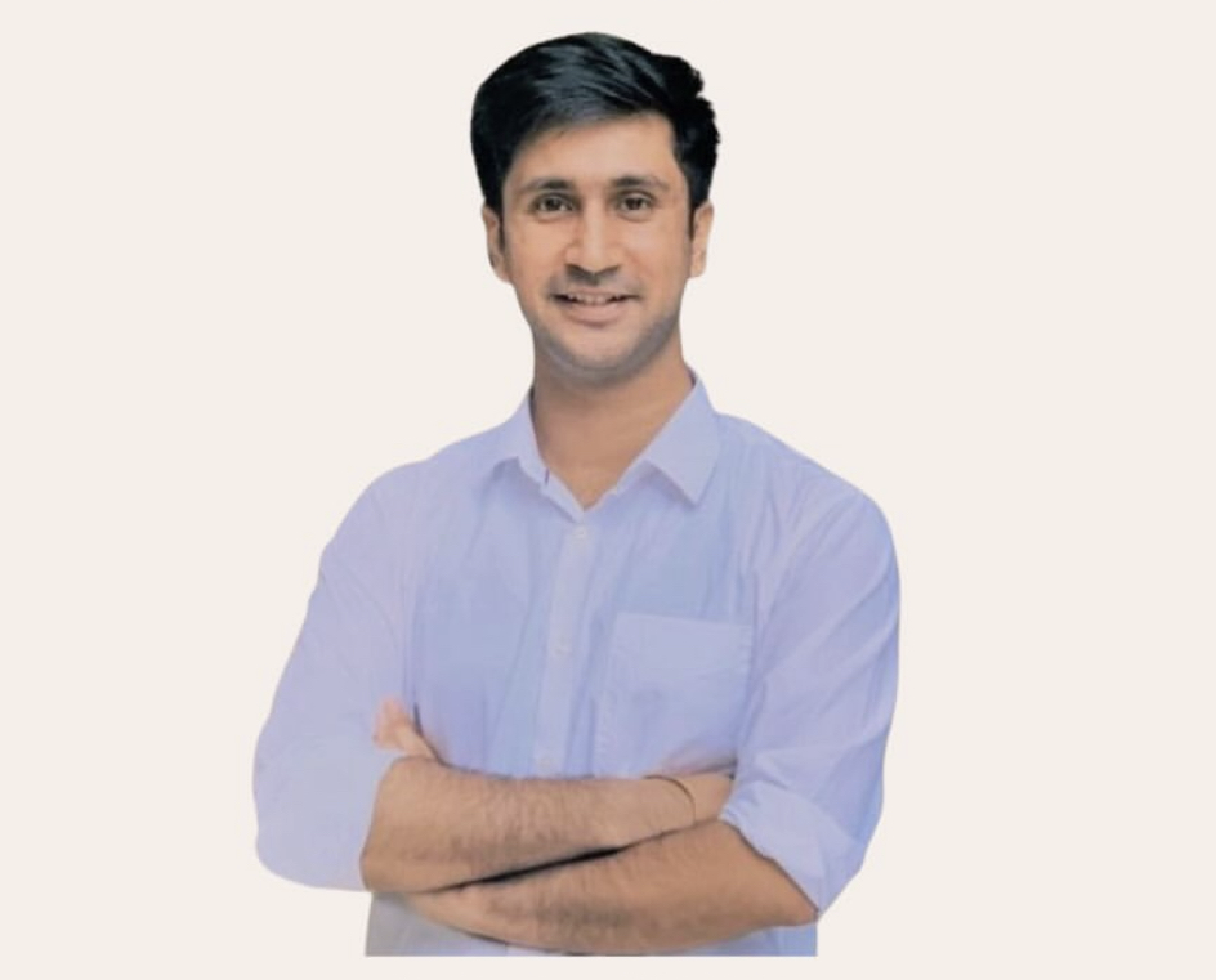
Brand Origins
What first inspired the creation of Econock, and what gap did you feel existed in the accessories market? Where is Econock located?
After nearly two decades in the fashion industry, a project from Swarovski challenged me to create something using an unusual material: crystal dust, essentially the residue generated during the production of Swarovski crystals.
That challenge led to some of the most beautiful pieces I had ever worked on. It was a true eureka moment. I realized that creativity does not necessarily thrive in abundance; it often flourishes within constraints.
The experience inspired me to pursue training in organizational sustainability. When I returned to the industry with that perspective, I began noticing something I had overlooked before: an extraordinary amount of beautiful material being treated as industrial residue.
While upcycling already existed as a practice, it was often limited to simply stitching together leftover pieces, with little emphasis on thoughtful design or innovation.
That realization became the foundation of Econock. In 2023, we launched our Circular Design Studio in New Delhi, India. Rather than seeing constraints as limitations, we embraced them as a design framework, one that shaped our aesthetic language and pushed us to innovate in new ways.
Econock often speaks about craftsmanship and resourcefulness. How would you describe the philosophy behind the brand to a new customer?
Our work is much like art, it allows our customers to express who they are and what they feel. We embrace material resourcefulness and thoughtful craftsmanship, handcrafting objects that carry both personal meaning and a deeper respect for the materials and hands that shape them.
We work with skilled artisans who bring decades of knowledge in working with materials and handcrafting objects that are meant to last. That respect for craft ensures that every piece is made with care, precision, and longevity in mind.
And, instead of constantly introducing new materials, we look closely at what already exists. Econock approaches these materials as opportunities rather than waste. By designing within those constraints, we create objects that feel thoughtful, functional, and quietly distinctive.
Your collections feel both contemporary and slightly architectural. Where does the design language of Econock come from? Many of the pieces have a subtle sculptural quality. Is architecture or art an influence?
Econock has always been a reflective design house, rooted in the present moment while drawing deeply from Indian cultural memory. India carries a rich visual language and layered iconography, and our intent has been to translate that meaningfully for a global audience without losing its essence.
Our first collection was inspired by the Rajputana warriors, reinterpreted through a contemporary lens. Post-pandemic, there was a shared emotional shift where protection, resilience, and a sense of armour became deeply relevant. We translated that into modern, functional objects that carry the spirit of armour while remaining practical and wearable.
These were not just accessories, but protective extensions of the self.
The sculptural and architectural quality you notice comes from our inclination towards what we call intelligent maximalism. It is a philosophy that feels inherently Indian to us. It balances restraint with depth, where every form has a purpose, and every detail carries meaning. Working closely with craft made it natural to explore structure, volume, and form in a way that feels both intentional and expressive.
Our inspirations are never singular. Architecture, art, music, cinema, books, and cultural narratives all converge into a unified moodboard when we begin building a collection. Each piece is an outcome of these layered influences rather than a direct reference to one source.
Looking ahead, our next range is shaped by the evolving reality of AI and simulation. It explores objects that feel almost virtually seamless in their conception, yet are manually crafted from scraps, remaining grounded in utility and everyday use.

Design Language & Product Development
Econock's silhouettes feel structured but restrained. How intentional is that?
It is very intentional. At Econock, structure is not just an aesthetic choice; it is tied to durability and purpose. We design objects that are meant to hold their form over time, both physically and visually. That inherent structure allows the pieces to exist almost like artefacts, something you can use, but also display.
At the same time, we consciously balance that with restraint. The idea is not to overdesign, but to let the form speak through clarity and function. Even when we explore softer silhouettes, there is always an underlying discipline in how they are constructed and how they hold space.
Our approach is to create objects that feel powerful without excess. There is a certain boldness in being clear, defined, and intentional. In many ways, that quiet strength becomes our version of being loud, because it reflects conviction, longevity, and the urgency to create products that truly last.
How does Econock approach proportion and silhouette when designing accessories?
At Econock, proportion and silhouette are always driven by a balance between visual language and real utility.
Our silhouettes often emerge from our art-led approach, where forms feel structured, sometimes symmetrical at first glance, yet carry subtle asymmetries that make them more dynamic and sculptural. This interplay allows the pieces to feel architectural, but never rigid or predictable.
Proportion is where functionality becomes central. We are very intentional about ensuring that every piece, regardless of its size, serves a clear purpose. We do not design objects to be purely minimal to the point of impracticality. Even our smallest pieces are engineered to hold, organise, and support everyday use.
A good example is the Seiki Wallet. While it visually echoes the language of a compact, almost mini bag, it is actually a rethought wallet designed to carry essentials in a more structured and efficient way. It extends our asymmetric design identity into a highly functional format.
How do you balance aesthetics with practicality when designing pieces that people use every day?
When we set out to design our Noral tote within our monochromatic design language, the starting point was utility. We asked how to create maximum space using minimal material, especially working with leather scraps. The hourglass form emerged from that exploration, not just as an aesthetic choice, but as a way to optimise capacity while maintaining structure.
The surface design follows the same thinking. The graphic pattern is not applied as decoration. It is engineered from a single piece of scrap leather. The positive and negative sections are cut in a way that the remaining material is rotated and reused to build the lower half of the bag. This allows us to cover the entire tote with minimal waste while creating a layered, mesh-like visual.
The result is a bag that is spacious, durable, and usable every day, while still carrying a strong visual identity. That balance is central to how we design at Econock, where aesthetics are never separate from how the object performs.
What is the design process like, from first sketch to the finished object?
Our process begins with a clear concept, but very quickly moves into testing it against real use. We start by building mockups to study size, proportion, and functionality. The focus at this stage is utility. How the object sits, how it opens, how it adjusts, and how securely it functions in everyday use. There is a lot of iteration around closures, ergonomics, and adaptability to ensure the piece feels intuitive to operate.
Parallel to this, we begin material and craft explorations. Since working with waste is central to us, we study how scraps can be reengineered into surface elements. These are not treated as add-ons, but as integral parts of the design language. The embellishments often emerge from what is available, giving each piece a distinct character and a more personal narrative.
We work closely with master artisans to understand the scale and nature of the scraps we can use. This directly informs construction. For instance, a piece like the Khai crossbody is built using multiple smaller panels for structure, while the remaining offcuts are transformed into surface textures. These are reworked into rugged, tactile embellishments that feel intentional yet organic.
Only once the construction, durability, and finish meet our standards do we move into creating the final sample. Each finished piece then becomes part of our evolving design library, informing future explorations and refinements.
The Econock Product Universe
Econock produces a range of objects, from bags and travel accessories to smaller functional pieces and collaborative designs. When you approach a new product category, what determines whether something belongs in the Econock universe?
Econock produces a range of objects. When we approach a new category, the question is always the same: does this object solve a practical need while also demonstrating thoughtful material use? If the answer is yes, it likely belongs in the Econock universe.
Many of your pieces feel like part of a larger system, such as clutches, slings, cases and accessories that interact with one another. Was Econock always intended to function as a modular ecosystem rather than standalone products?
Most of our pieces were initially designed with a strong focus on individual utility. Each object needed to function well on its own. But as we evolved, we realised that users were seeking more from designer objects, not just standalone use, but how they could interact and extend into daily systems.
Over time, this led us to introduce smaller goods and add-ons that naturally complement our core accessories. What is interesting is that this modularity was not entirely planned from the beginning. It emerged quite organically through the way we design and build.
In many ways, we were creating modular objects unconsciously. What started as a functional approach has now grown into a more seamless ecosystem, where pieces connect, layer, and work together. It also aligns closely with our commitment to reducing waste, as these systems allow us to utilise materials more efficiently while creating products that feel interconnected rather than isolated.
Many Econock products sit somewhere between fashion accessory and functional object. Do you see the brand operating within fashion, or within a wider culture of designed objects?
Econock exists at an intersection of use. Our intent has always been to create pieces that feel like you are carrying or wearing art, something that expresses your identity in a way that is not bound by gender or convention. The object matters as much as the experience of using it.
As a young brand, we are highly experimental. We are constantly exploring different mediums of craft and ways to work with waste, allowing the category to evolve naturally based on what the idea demands.
We remain open to moving beyond fashion into any space where design can create impact. For us, it is less about fitting into a category and more about building meaningful, functional objects that serve a larger purpose.
Is there an Econock piece that you feel best represents the spirit of the brand?
For us, it would be the Khai Crossbody.
It was part of our third collection, Highbraid, which explored the idea of braided craft elevated into a more contemporary expression. The bag captures our design language quite closely.
From a utilitarian perspective, it is spacious and modular, allowing additional elements to be attached and adapted over time. At the same time, the form remains playful, guided by geometry but intentionally asymmetric.
What stands out most is the surface weave. It is a texture developed entirely from waste, reengineered into something tactile and distinctive, with potential that goes beyond just fashion.
And finally, its gender neutral nature makes it feel truly universal, which is something we deeply value as a brand.

Ivy Hairband

Khai Wristlet
Materials & Craft
Econock products reimagine design by using overlooked industrial offcuts. Talk to me about the importance of upcycling materials and how redeeming material is deeply dignifying for the planet.
Working with industrial offcuts, we are not simply reusing material. We acknowledge that these fragments still hold the integrity, quality, and potential of the original resource.
Redeeming such materials is deeply dignifying for the planet because it respects the energy, labour, and natural resources already invested in them.
We do not treat what is discarded as a limitation but as a creative starting point. The irregularities and constraints of reclaimed materials often lead to new design languages, surface techniques, and modular structures. In that sense, the process becomes both an environmental act and a design philosophy, one that transforms what is overlooked into objects of lasting value.
Can you tell us about the people behind the pieces and the craft techniques involved in making them? How are you adding dignity to the lives of Econock's artisans and their local environment?
One of our artisans, Aleem, had his craft shortlisted for a national-level award. He flew to present his work, something he had never imagined doing. The Digital Artisan Award even featured him in their magazine. That moment was not about income. It was not even about recognition alone. It was about identity. It is no longer invisible labour. It is recognised craftsmanship.
Could you also outline the core materials traditionally used across Econock pieces? A simple list would help readers understand the brand's material palette.
At Econock, our mission is to end fashion waste. We started with leather waste as they carried significant environmental costs. Allowing them to go to landfill simply because of misallocation felt irresponsible.
By working exclusively with existing leather offcuts, we are not commissioning new hides. We are extending the life of material that already exists in the system. Therefore, we are absorbing the demand for new material.
At the same time, we strongly believe in the transition toward next-generation, bio-based materials. Our recent partnership with Rheom Materials, which creates leather alternatives from sugar-based inputs, reflects that commitment.
We have also built an upcycled material library from leather offcuts, thread waste, fabric scraps and even discarded fishnets from the Indian Ocean. Sustainability is not a single material decision. It is a systems approach. Our goal is to reduce waste and materials are a means to it.
Longevity & Commercial Thinking
What role does longevity play in your approach to product design?
Longevity is not just about materials lasting, it is about people feeling that their work, and their story, endure too. Because at its heart, fashion is intimate. It touches our skin. It carries memory. It signals identity. And the same should be true for the people who make it.
If we want a sustainable industry, it cannot just be low-carbon, it has to be high-care. Care for materials and care for labour. Our approach to design and collaboration with artisans is not abstract, it reflects longevity for materials and dignity to the makers.
People describe Econock pieces as feeling like luxury objects, but without the traditional luxury price structure. Was it always your intention to build something that delivers high-end quality without relying on a luxury pricing model?
Our focus has been on thoughtful design, responsible materials, and efficient production rather than building cost around heavy markups or legacy retail models. By working closely with our manufacturing ecosystem and using reclaimed materials, we are able to invest in craftsmanship and durability while keeping the products more accessible.
Many brands speak about sustainability morally. Few speak about it commercially. Do you believe long-term design can also be a stronger financial model? In your view, is durability more scalable than trend-driven fashion cycles?
Yes, I believe longevity is not just an ethical choice, it is an economic one. Products that are designed to last reduce the constant pressure to produce and consume at high frequency.
Over time that creates a healthier relationship between product value, pricing, and customer trust. When something performs well for years, it builds loyalty and lowers the need for constant marketing cycles. In that sense, long-term design can actually become a more stable financial model than volume-driven consumption.
Do you see Econock as competing in fashion, or in long-term consumer behaviour?
In many ways we are participating in both, but the deeper ambition is behavioural. Fashion is the entry point because accessories are expressive and personal. But the larger question we are exploring is whether people are ready to value objects that stay with them longer. If Econock succeeds, it is not only because the products look good, but because they help normalize the idea that fewer, better things can still feel aspirational.
What has been the hardest commercial decision you have had to make so far?
One of the hardest decisions has been resisting the temptation to grow too quickly. The system rewards speed, large volumes, and constant product turnover. We have had to be deliberate about pacing, ensuring that materials, construction, and supply chains stay aligned with the values we started with. That sometimes means choosing slower growth in the short term to build something more credible over the long term.
What misconception do people have about building a purpose-driven brand?
A common misconception is that purpose alone creates demand. In reality, customers ultimately respond to quality, usefulness, and design. Purpose can strengthen the story, but it cannot compensate for weak products. For a purpose-driven brand to succeed commercially, the product must stand confidently on its own, even before the values are explained.
What kind of collaborations or partnerships excite you most for the future of the brand? Econock has also developed collaborative collections with other designers and partners. What do collaborations allow you to explore that the core brand might not?
At Econock, collaborations act almost like a laboratory experiment. They help us push the boundaries of circular materials and design thinking. The most exciting collaborations are those that expand the material and design possibilities of the products.
Partnerships with next-generation material innovators, craftspeople, conscious designers and brands have helped push the boundaries of what circular products can look and feel like. At the same time, working with thoughtful retailers and cultural collaborators helps place these objects in contexts where the ideas behind them can be appreciated more deeply.
The Econock Woman
Where do you imagine Econock pieces being worn, and what kind of life or moment do you design for?
Econock pieces are designed for a life that moves, what we often think of as the global traveller.
We imagine them in moments of transition. Airports, city walks, gallery visits, long days that shift into evenings. The idea is to carry objects that feel like art, without ever compromising on utility.
Many of our accessories sit comfortably across occasions. A clutch or wristlet can be carried to a gala or an event, but the same piece can adapt with an adjustable strap, making it practical for travel. They are spacious, functional, and designed to move with you, while still making a statement wherever you go.
At its core, we design for a free spirited lifestyle, where function supports expression, and objects become a part of how you experience the world.
What kind of woman do you imagine carrying Econock? Is there an archetype she fits?
We do not imagine an Econock woman as a single archetype, because today's woman holds many roles at once. She moves fluidly between work, personal life, social spaces, and travel, often within the same day.
What defines her is not a label, but a mindset. She values ease, adaptability, and expression. She looks for pieces that can transition with her, from day to evening, from functional to expressive, without needing to change or compromise.
She is drawn to objects that feel considered. Something that carries the sensibility of couture, but remains accessible and usable. She appreciates design that stands out quietly, without excess.
At the same time, she is conscious. She is open to discovering homegrown brands, engaging with new ideas, and making choices that align with a more responsible way of consuming, without giving up on design, quality, or individuality.
In many ways, she is independent in thought, curious in taste, and intentional in what she chooses to carry.
You once described carrying an Econock bag as invoking a warrior spirit. What did you mean by that, and do you see Econock customers carrying your bags as embodying that in terms of strength, independence or attitude?
Econock pieces are inherently bold in their form, and choosing to carry them is, in itself, a statement of self.
When we speak of a warrior spirit, we are not referring to something aggressive, but something deeply internal. Everyone is navigating their own battles, whether personal, professional, or emotional. The act of choosing yourself, trusting your instincts, and moving through the world with clarity is what we associate with that spirit.
We see Econock customers embodying this in a quiet but powerful way. There is strength in being self assured, in expressing yourself without hesitation, and in carrying objects that reflect that intent. It is a calm, composed confidence rather than something loud or forceful.
That sense of being grounded yet expressive, independent yet aware, is what creates that aura. It is a kind of strength that feels intentional, where presence comes from conviction, not noise.
Closing Reflection
At Denude, we are drawn to what is stripped back, what remains when you take away excess.
In Econock's case, what remains is not simply sustainability as branding, but a broader attempt to rethink the relationship between waste, labour, longevity, and design itself.
Rather than treating discarded material as compromise, the studio approaches it as structure, something capable of carrying utility, identity, and cultural value long after its original system considered it finished.